
Steel vs. Wood Fence Posts: Why Every Cedar Fence We Build in Lubbock Is on Steel
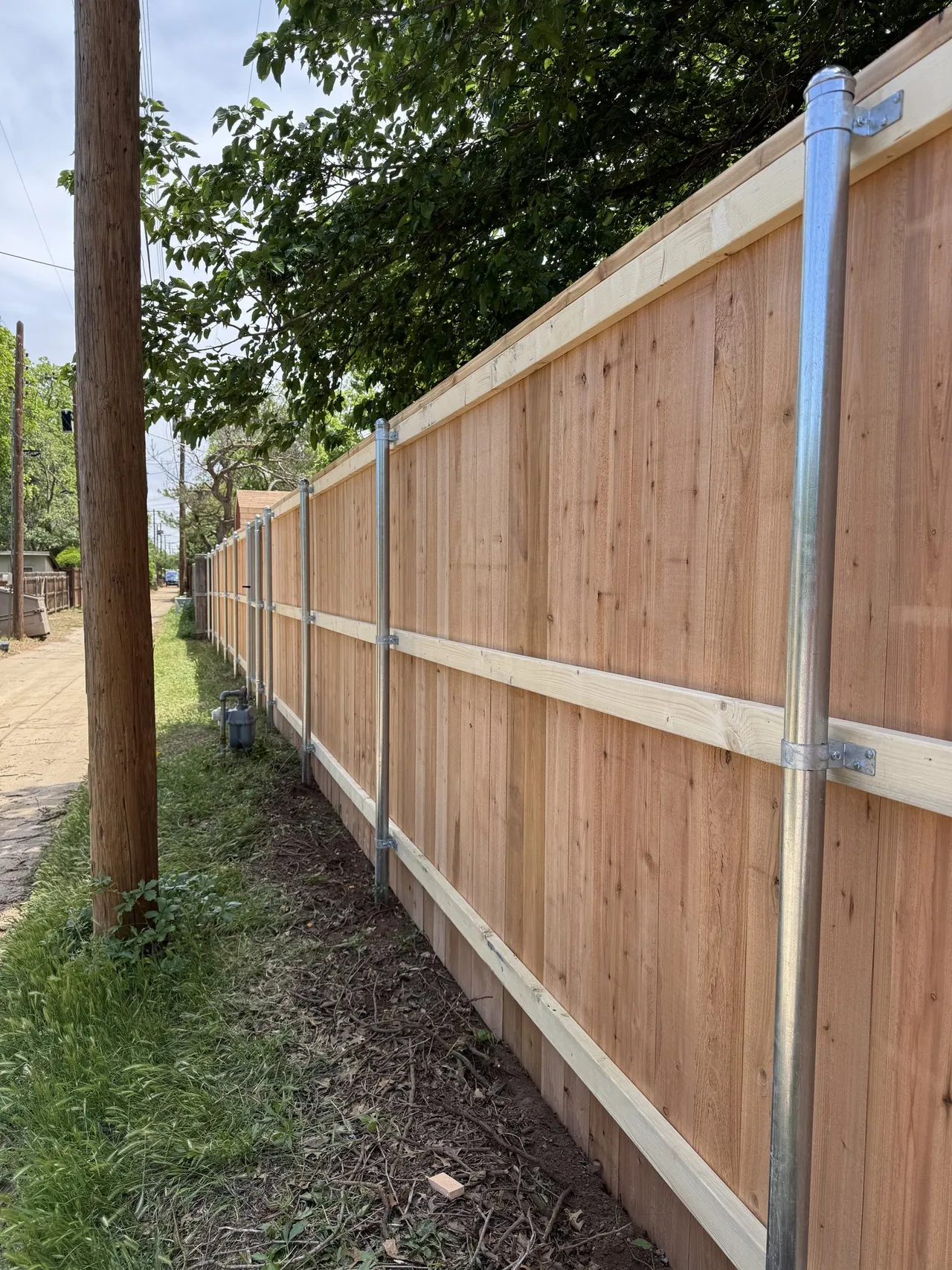
Drive down the alley behind almost any older Lubbock neighborhood and you’ll see it. Fences leaning out toward the alley. Fences leaning in toward the yard. A few being held up by the neighbor’s fence and a prayer.
The pickets usually aren’t the problem. The posts are.
That’s why every cedar fence we build sits on galvanized steel posts. No exceptions, and no wood posts. Here’s why, and what it means for your fence.
Why Wood Fence Posts Rot and Lean
A wood post doesn’t fail all at once. It fails at the ground line, right where you can’t see it.
The part of the post buried in the dirt stays damp. The part above it dries out in the sun. That wet-and-dry line at the surface is where rot starts, and it’s the same spot that takes the most stress when the wind blows. Add termites, and the post is fighting a losing battle.
Now put a 6 or 7 ft solid privacy fence on top of that post. A privacy fence is basically a sail. Every gust of West Texas wind pushes on it, and all of that force comes down on the one part of the post that’s rotting. First you get a slight lean. Then a section that moves when you push on it. Then a 2×4 propped against the fence to hold it up.
(If you have a 2×4 propped against your fence right now, no judgment. You’re in good company.)
Steel vs. Wood Fence Posts at a Glance
| Wood posts | Galvanized steel posts | |
|---|---|---|
| Rot | Rots at the ground line | Doesn’t rot |
| Termites | Can be eaten | Nothing for termites to eat |
| Warping | Can twist and warp as it dries | Stays straight |
| What you see from the front | Cedar pickets | Cedar pickets |
That last row matters. A steel post fence doesn’t look like a steel fence. The posts sit on the back side, behind the rails and pickets. From the front, it’s a cedar fence.
How We Build a Cedar Fence on Steel Posts
A fence is only as strong as what’s holding it up, so here’s what’s holding up ours:
- 2 3/8“ galvanized steel line posts. The galvanized coating protects the steel from rust.
- Schedule 40 steel on every gate post. Gates take more abuse than any other part of a fence, so the posts that hold them get heavier-wall pipe. Every gate, every time.
- Three rails per 8 ft section. Each rail is lag-screwed to a steel bracket on the post, which keeps the fence line stiff and flat.
- A cap on every post to close off the top of the pipe.
If you want your gates to hold up as well as your posts, we also offer steel gate frames. Wood-framed gates sag over time. A steel frame keeps the gate square and swinging smoothly.
Driven 4 ft Deep or Set 3 ft in Concrete
We install steel posts one of two ways: driven 4 ft into the ground, or set 3 ft deep in concrete. Which one is right depends on your property, and we’ll tell you what we recommend when we come out to measure.
Steel Takes Care of the Posts. Here’s What Takes Care of the Rest.
Here’s how I think about a fence. The pickets are the part that wears. The posts are the frame. With steel, the frame of your fence outlasts the pickets on it.
Two things help the pickets keep up:
- Stain. Cedar left bare in the West Texas sun turns gray and dries out. We recommend staining a new fence within 3 months and restaining every 3 to 4 years. More on that on our fence staining page.
- A concrete fence curb. A curb along the bottom of the fence keeps the pickets up out of the grass and dirt, where they’d otherwise stay wet and rot, and away from string trimmers. We pour our own. See our concrete page.
Signs Your Wood Fence Posts Are Failing
If you have a wood-post fence now, here’s what to look for:
- The fence leans, even a little.
- A section moves when you push on it.
- The wood at the base of a post is soft or crumbling.
- Posts are propped, braced, or tied to something to keep them up.
If you’re checking more than one of those boxes, the posts are on their way out. You can keep propping it up, or you can rebuild it on steel. If the damage is limited to a few sections or a gate, see our fence repair page. When we replace a fence, we tear out the old one and build the new one on steel posts. Styles, heights, and everything else are on our cedar fencing page, and if you’re still deciding on a look, here’s how dog ear, capped, and board-on-board fences compare.
Pickets are what you look at. Posts are what keep it standing. Build on steel.